Search
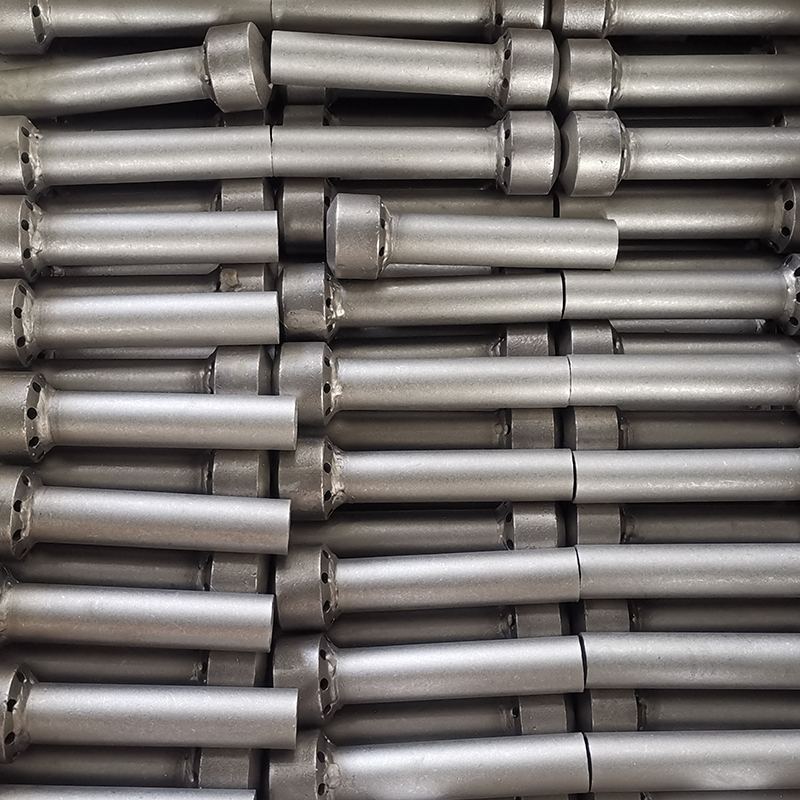
In most industrial and utility boiler applications, a Boiler air nozzle typically achieves more uniform airflow distribution than a slotted air nozzle , primarily because of its circular or multi-port geometry, which produces a symmetrical velocity profile around the discharge point. This is especially evident in fluidized bed systems, where an afbc boiler air nozzle must maintain even fluidization pressure across the entire bed area to keep the bed material properly suspended. Field measurements from combustion optimization studies commonly show that a well-designed Boiler air nozzle can maintain airflow deviation within ±5% to ±8% across the nozzle array, while a slotted air nozzle, due to its elongated opening and directional bias, often exhibits deviation in the range of ±12% to ±18% under similar operating pressure and load conditions.
This does not mean a slotted air nozzle is inferior in every scenario. Its long, narrow opening is advantageous for creating a wide, flat air curtain, which is useful in specific staged-combustion or wall-blanketing applications. However, when the operational priority is consistent air-to-fuel mixing across the entire combustion chamber cross-section, a Boiler air nozzle generally outperforms a slotted air nozzle in distribution consistency, repeatability, and resistance to localized flow bias. In fluidized bed combustion, this same principle applies to the boiler bed nozzle layout, where consistent air injection across every point of the distributor plate is essential for stable bed fluidization.
Why Airflow Uniformity Matters for Boiler Users
Airflow uniformity is not a purely academic concern. Boiler operators care about it because uneven air distribution directly affects combustion efficiency, emissions, and equipment longevity. When one section of the furnace receives excess air while another is starved, the result is incomplete combustion in some zones and excess oxygen in others. This imbalance can raise unburned carbon in fly ash, increase carbon monoxide emissions, and create localized hot spots that accelerate refractory and tube wear. In an afbc boiler air nozzle system specifically, uneven distribution can also cause localized bed defluidization, which leads to agglomeration and clinker formation within the bed material.
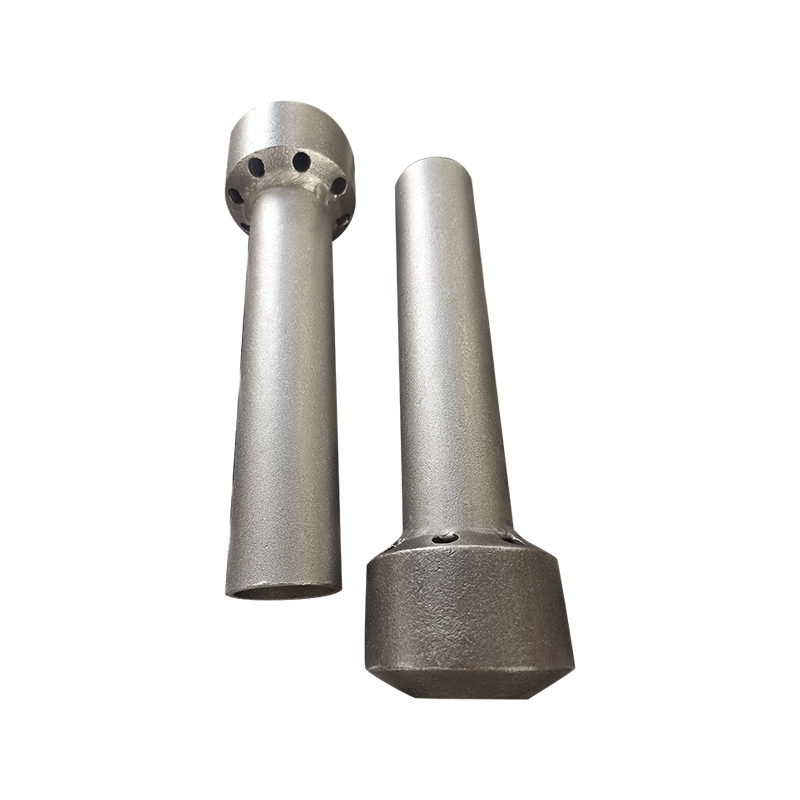
Boiler air nozzle
Common Symptoms of Poor Airflow Distribution
- Elevated CO readings despite adequate total air supply
- Uneven furnace exit gas temperature profile
- Localized slagging or clinker buildup near underventilated zones
- Increased unburned carbon content in bottom or fly ash
- Higher NOx formation in over-aerated zones
- Uneven bed temperature spread across a boiler bed nozzle distributor plate
Because a Boiler air nozzle is engineered specifically to manage these variables, plant engineers frequently choose it when uniformity is the primary performance target rather than raw airflow volume.
Geometric Differences That Drive the Performance Gap
The core reason a Boiler air nozzle outperforms a slotted air nozzle in uniformity comes down to geometry and how each shape interacts with duct pressure fluctuations.
Boiler Air Nozzle Geometry
A typical Boiler air nozzle uses a round or multi-port circular opening. This shape allows air to accelerate symmetrically as it passes through the throat, producing a jet with consistent velocity across its circumference. Because the pressure recovery is symmetrical, the resulting airflow pattern remains stable even when upstream duct pressure varies slightly from one nozzle position to another. This same circular-port principle is why an afbc boiler air nozzle is preferred over slot-style openings for windbox-to-bed air delivery, since bed fluidization depends heavily on predictable, repeatable jet velocity at every port.
Slotted Air Nozzle Geometry
A slotted air nozzle uses an elongated rectangular opening. While this design is excellent for producing a wide, sheet-like air curtain, it is more sensitive to pressure variation along its length. The ends of the slot often experience different velocity than the center, which creates a natural non-uniformity that is difficult to correct without additional flow-straightening devices.
| Parametru | Boiler Air Nozzle | Slotted Air Nozzle |
|---|---|---|
| Velocity deviation across nozzle array | ±5% to ±8% | ±12% to ±18% |
| Sensitivity to upstream pressure fluctuation | Scăzut | Moderat spre ridicat |
| Air jet pattern | Focused, symmetrical cone | Flat, wide curtain |
| Best suited application | Point-source mixing zones and fluidized bed distributor plates | Wall-blanketing or curtain zones |
Impact on Combustion Efficiency and Emissions
Uniform airflow distribution from a Boiler air nozzle contributes directly to combustion completeness. When air is distributed evenly, the fuel-air mixture reaches stoichiometric balance more consistently throughout the furnace volume, which reduces the excess air margin operators need to maintain as a safety buffer against incomplete combustion. In an afbc boiler air nozzle configuration, this same uniformity ensures that fluidizing air reaches every section of the bed at a velocity sufficient to keep particles suspended without over-fluidizing localized zones, which helps stabilize bed temperature and improve carbon burnout.
Many boiler operators report that switching from a slotted air nozzle configuration to a Boiler air nozzle configuration allows a reduction in excess air ratio by roughly 2% to 4% while maintaining the same or better carbon burnout. Since every percentage point reduction in excess air can improve boiler thermal efficiency by approximately 0.5% to 1%, this uniformity advantage translates into a measurable fuel savings over an annual operating cycle. Operators of fluidized bed units often see similar benefits when upgrading an aging boiler bed nozzle layout to a design with tighter manufacturing tolerances and more consistent port sizing.
NOx and CO Considerations
A Boiler air nozzle's tighter velocity control also helps limit the formation of localized high-oxygen pockets that drive thermal NOx generation. At the same time, because underventilated zones are minimized, CO formation from incomplete combustion is also reduced. A slotted air nozzle can achieve similar emissions control, but typically requires more careful tuning and more frequent field adjustment to compensate for its inherent flow variability.
Operational and Maintenance Considerations
Beyond raw airflow uniformity, several practical factors influence which nozzle type is preferable for a given boiler system.
Fouling and Erosion Resistance
The narrow opening of a slotted air nozzle is more prone to partial blockage from ash or particulate buildup, which further degrades its already uneven flow profile over time. A Boiler air nozzle, with its rounder cross-section, tends to resist fouling more effectively and maintains its designed flow pattern longer between cleaning cycles. This is particularly important for a boiler bed nozzle, which sits directly beneath a bed of abrasive sand or ash material and is continuously exposed to erosive particle movement; a fouled or eroded bed nozzle can quickly create dead zones where bed material stops fluidizing altogether.
Tuning and Adjustment Frequency
Because a Boiler air nozzle holds its airflow characteristics more consistently, operators generally spend less time on periodic re-tuning. A slotted air nozzle, by contrast, may require more frequent damper or register adjustments to counteract flow drift caused by uneven wear or fouling along the slot length. In an afbc boiler air nozzle system, minimizing this drift is especially valuable, since bed pressure drop is a key indicator operators monitor continuously to detect fluidization problems.
Complexitatea instalării
- A Boiler air nozzle is generally easier to align precisely because its circular geometry has no directional orientation requirement.
- A slotted air nozzle must be installed with exact rotational alignment to achieve its intended curtain pattern, adding installation time and inspection steps.
- Replacement of a Boiler air nozzle typically involves fewer calibration steps after installation compared to a slotted air nozzle.
- Replacing a worn boiler bed nozzle usually requires matching the exact port count and spacing of the original distributor plate design to preserve fluidization uniformity.
When a Slotted Air Nozzle May Still Be the Right Choice
Despite the uniformity advantage of a Boiler air nozzle, there are legitimate cases where a slotted air nozzle remains the better engineering choice. If the application specifically requires a continuous air curtain along a furnace wall, such as for slag layer protection or tube wall cooling, the elongated shape of a slotted air nozzle is purpose-built for that function and cannot be easily replicated by a round Boiler air nozzle without installing many additional units.
In these wall-protection scenarios, uniformity across the length of the slot is less critical than achieving continuous coverage, so the inherent flow variability of a slotted air nozzle is an acceptable trade-off for its coverage benefit. It is worth noting, however, that in fluidized bed boilers, the slotted design is rarely used at the bed level at all, since an afbc boiler air nozzle almost always relies on round or capped-port geometry to prevent bed material from sifting back into the windbox during shutdown.
Practical Selection Guidance
For most operators evaluating a Boiler air nozzle against a slotted air nozzle, the decision should be based on the specific combustion objective rather than a blanket assumption that one is universally superior.
- Choose a Boiler air nozzle when consistent point-source mixing across a wide furnace cross-section is the priority.
- Choose a Boiler air nozzle when minimizing excess air and improving thermal efficiency is a stated project goal.
- Choose a slotted air nozzle when continuous wall or curtain coverage is required over a long linear span.
- Specify an afbc boiler air nozzle whenever the project involves a fluidized bed unit, since bed fluidization stability depends on consistent, erosion-resistant port geometry.
- Evaluate the condition of the existing boiler bed nozzle plate during any efficiency audit, since worn or eroded ports are a common hidden cause of poor bed fluidization and elevated fuel consumption.
- Consider a hybrid layout, using a Boiler air nozzle for primary combustion air and a slotted air nozzle for wall protection zones, when the boiler design allows for both functions.
The data consistently supports that a Boiler air nozzle provides more uniform airflow distribution than a slotted air nozzle in the majority of combustion-air applications, and this advantage becomes even more pronounced in fluidized bed systems, where an afbc boiler air nozzle and a properly designed boiler bed nozzle plate work together to keep the bed evenly fluidized and combustion stable. The final selection should always be validated against the specific furnace geometry, fuel type, and operational goals of the boiler system in question.